



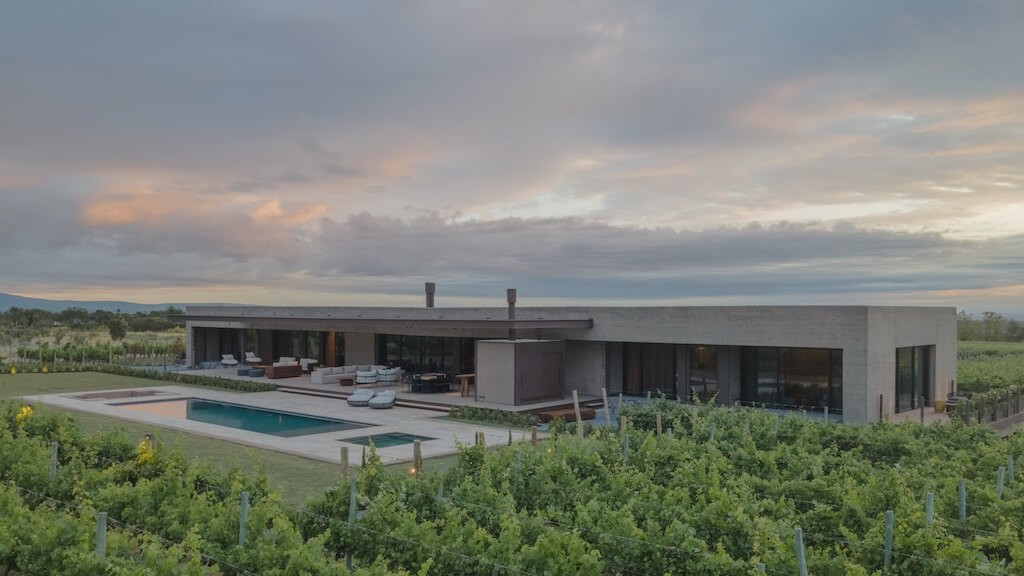
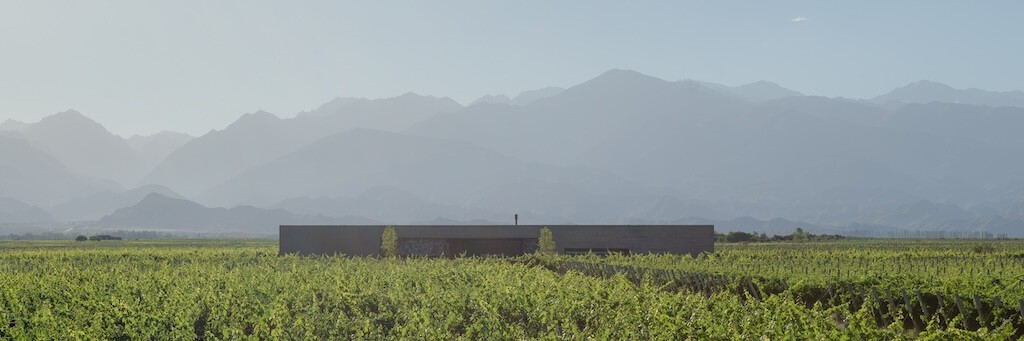
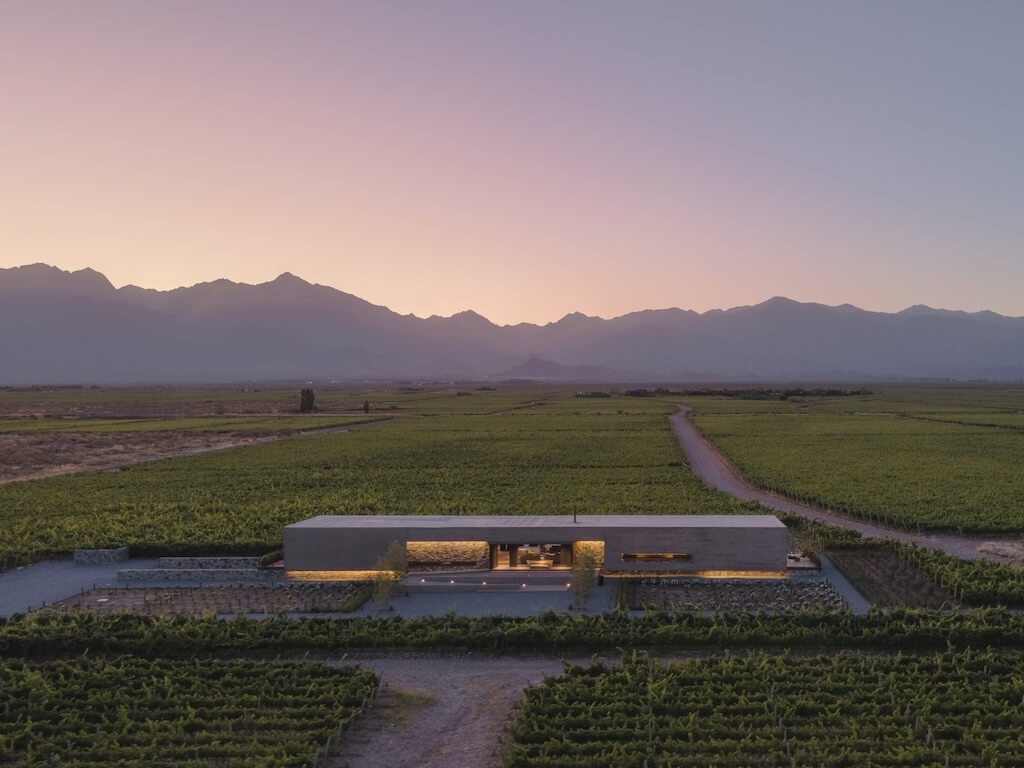
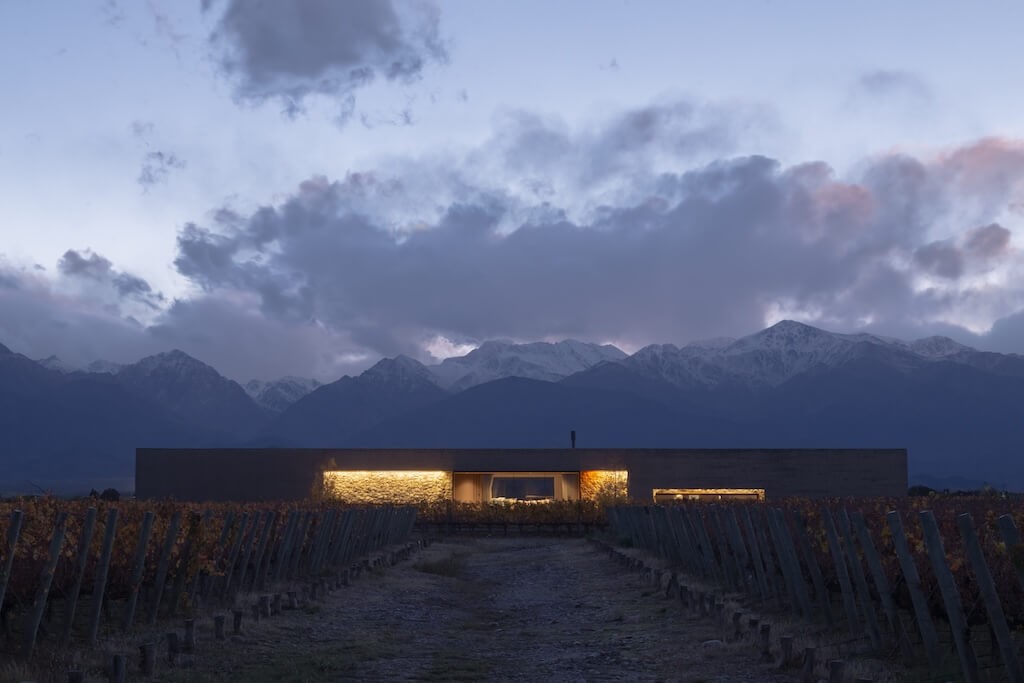
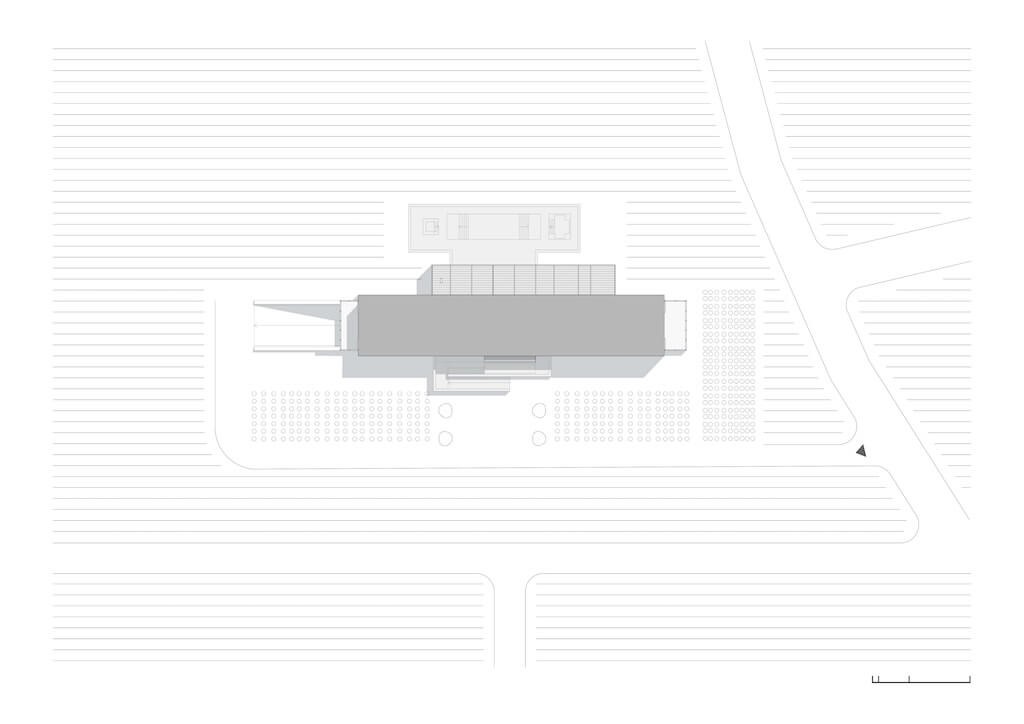
González Olsina & Vega Arquitectos: The project site is a six-acre vineyard within The Vines of Mendoza, in Los Chacayes, Tunuyán, located 85 kilometers southwest of the city of Mendoza, Argentina. Set at the foothills of the Andes and immersed in the renowned Uco Valley—one of the country’s most prestigious wine regions—the house is surrounded by open horizons and the profound silence of the Andean landscape.
In this vast topography, Scott, the client—an enthusiast of wine and its culture—chose to acquire his own vineyard, produce his wines, and build a home where he could share days of rest, nature, and contemplation with his loved ones.
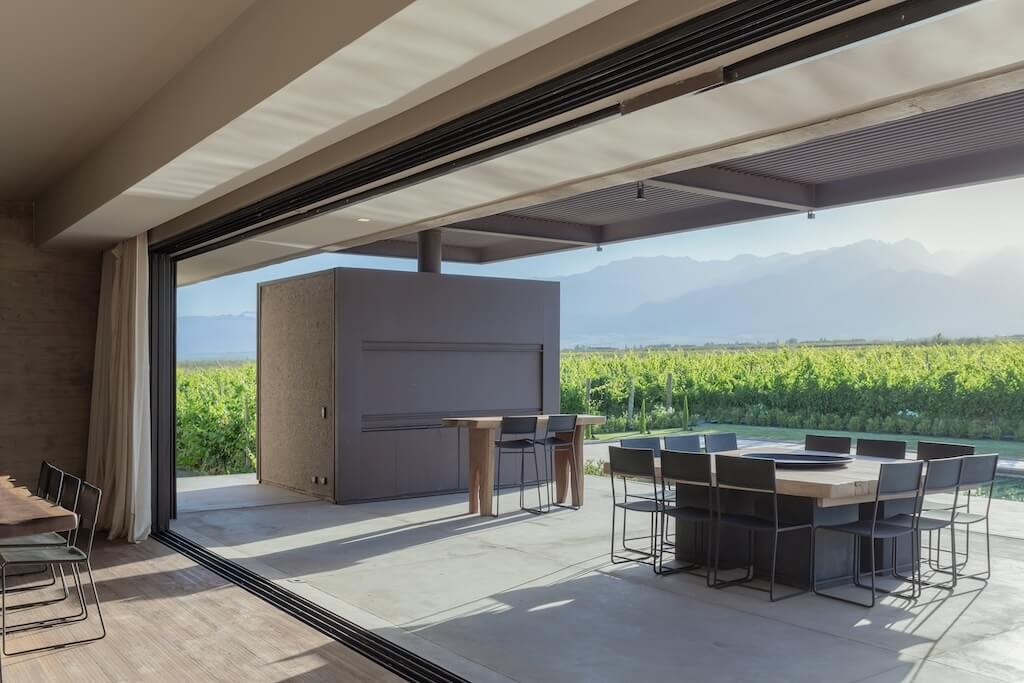
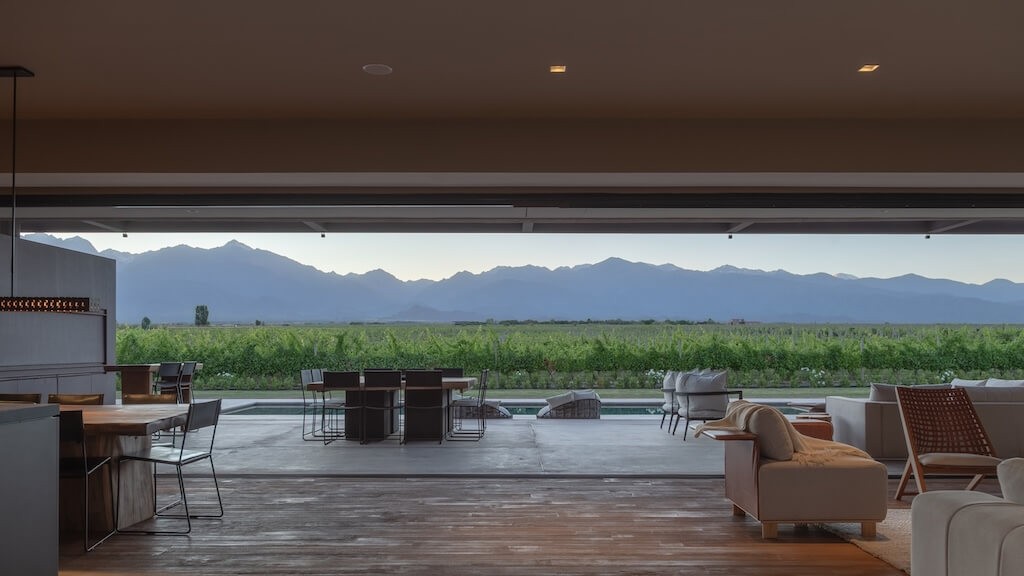
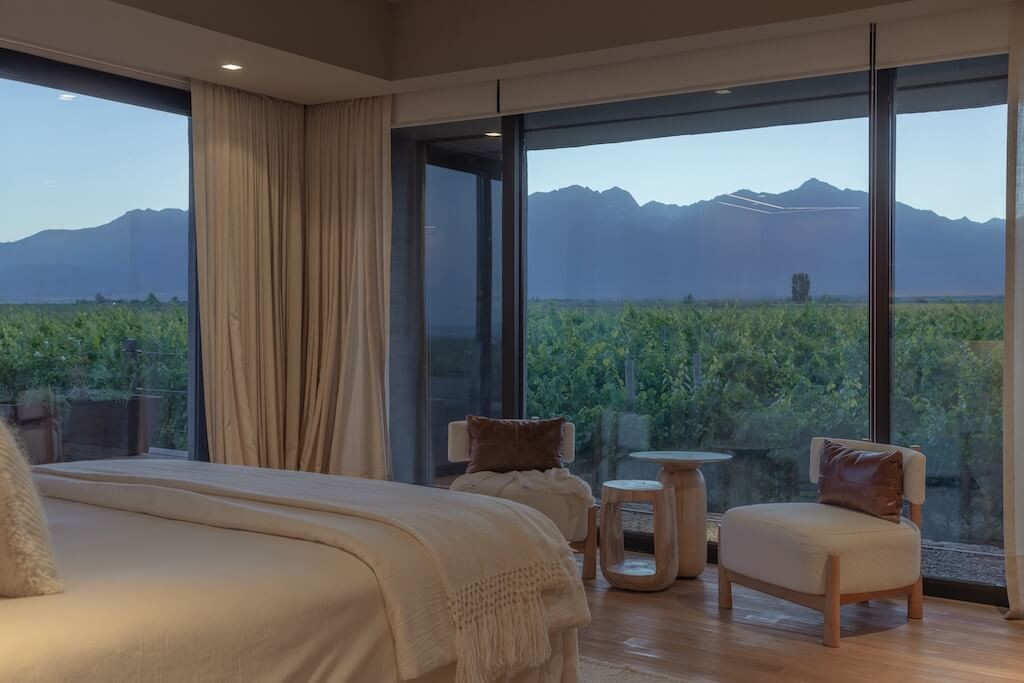
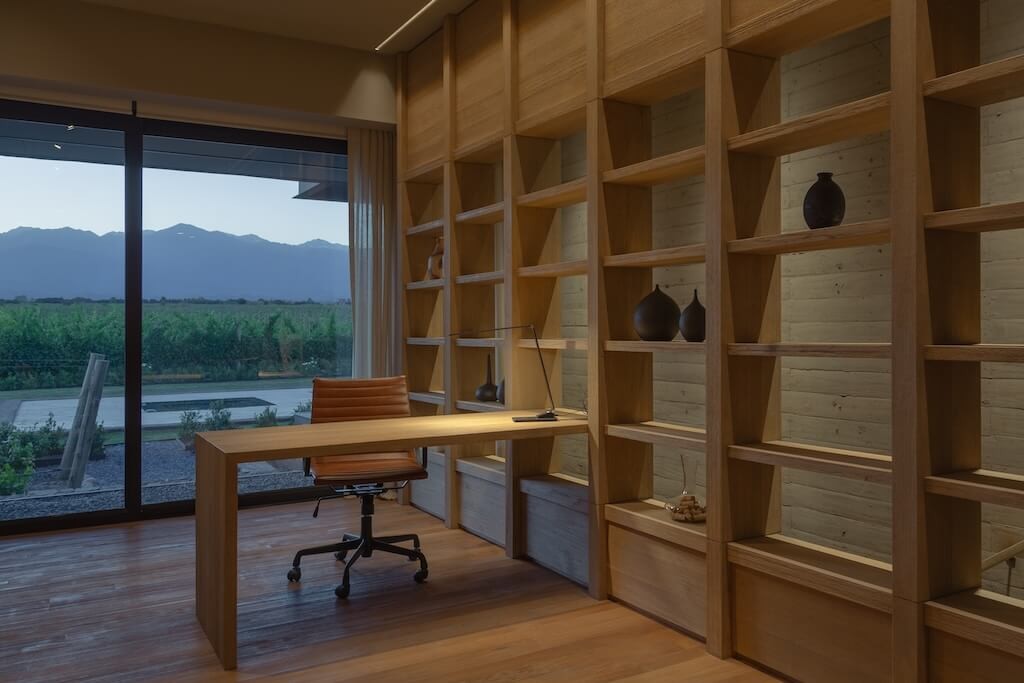
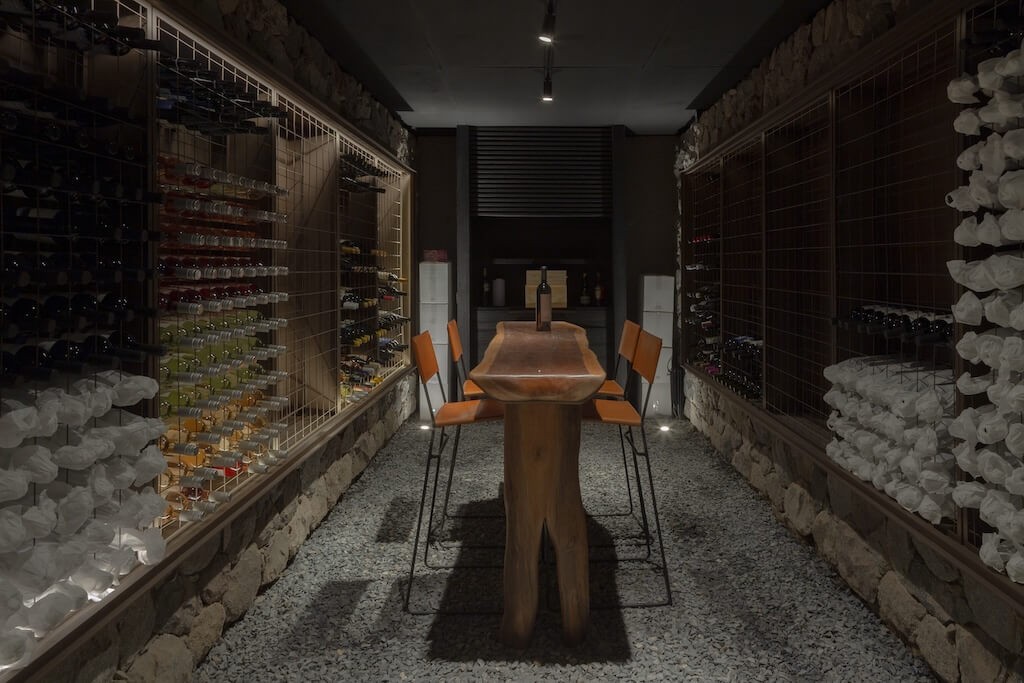
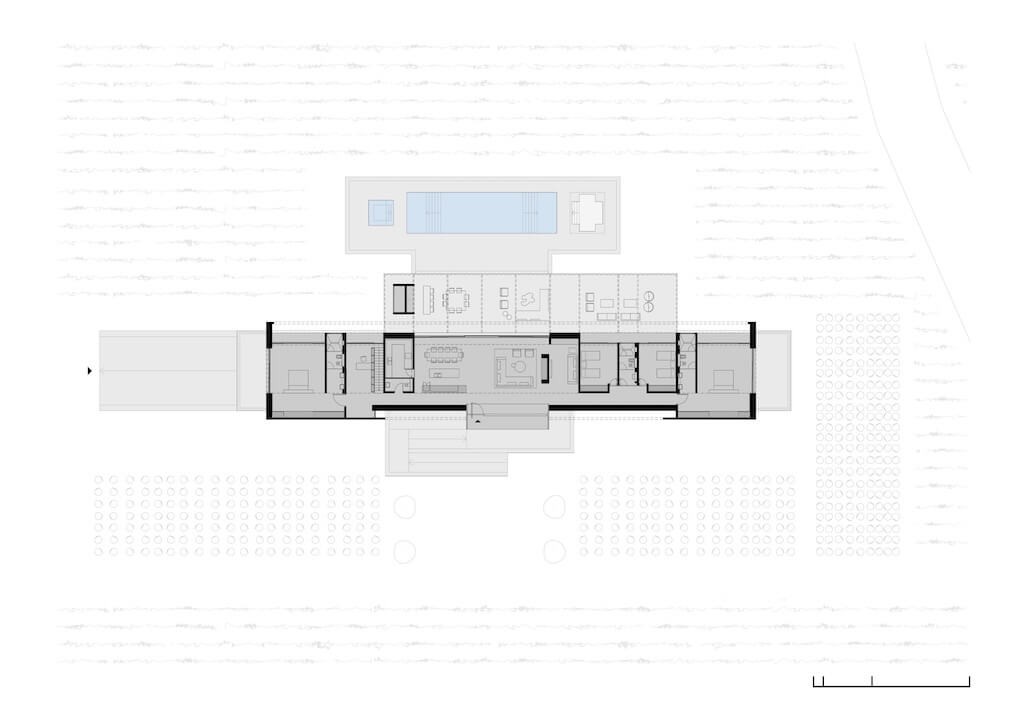
The program called for a non-urban dwelling conceived as a refuge, establishing a direct relationship with both the vineyard and the mountain range. It comprises a shared space for living, dining, and cooking; four bedrooms; a workspace; a wine cellar; and outdoor leisure areas.
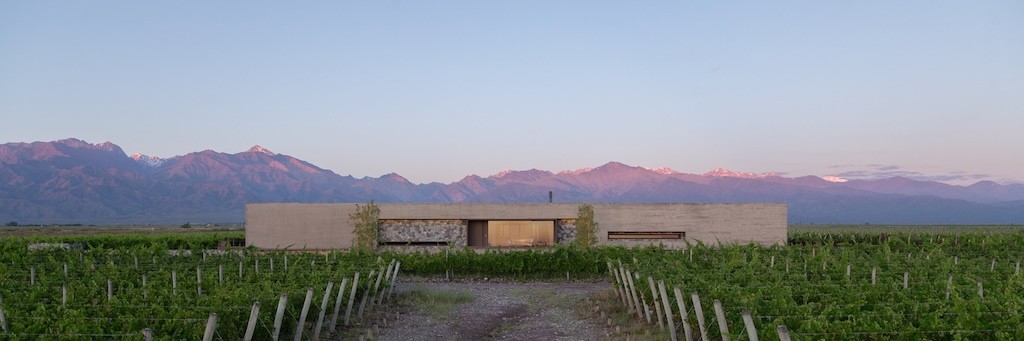
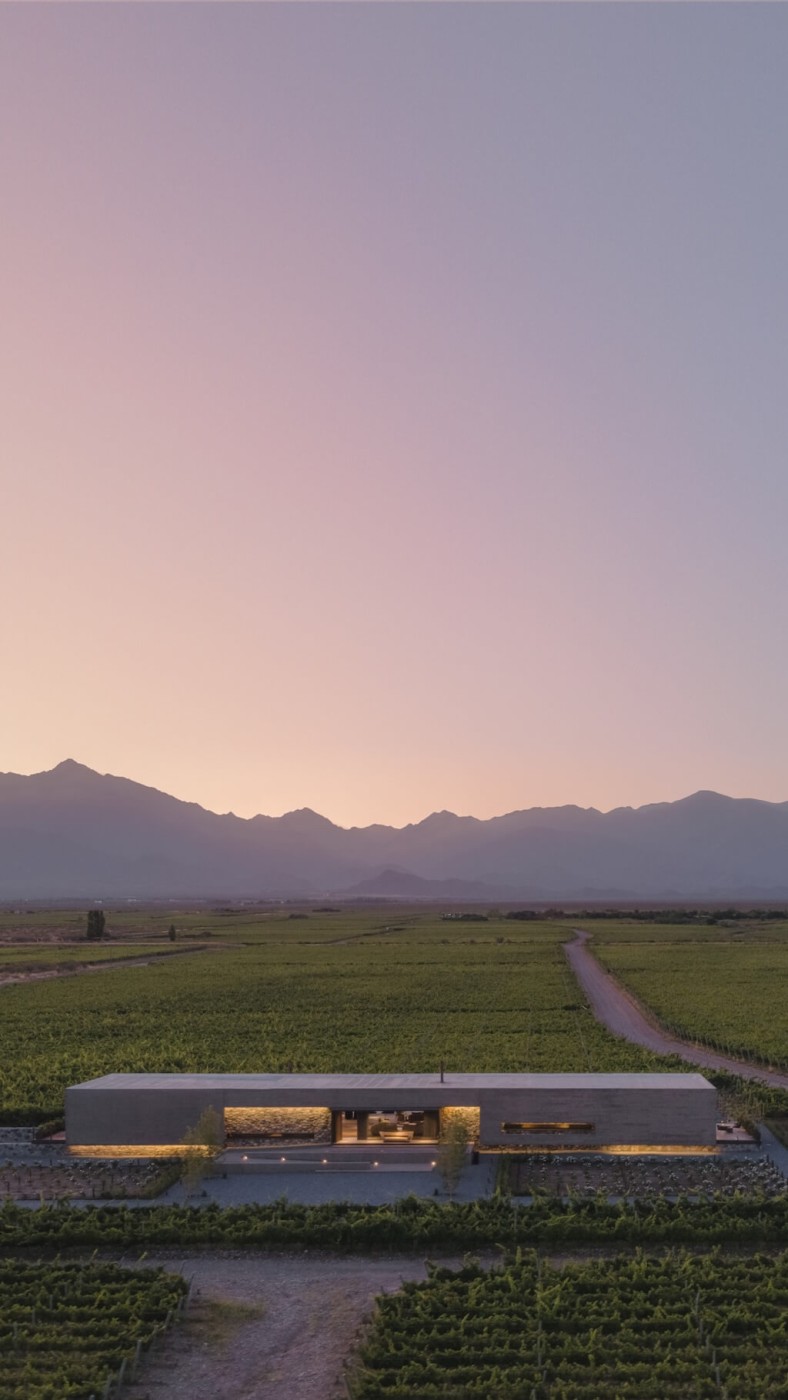
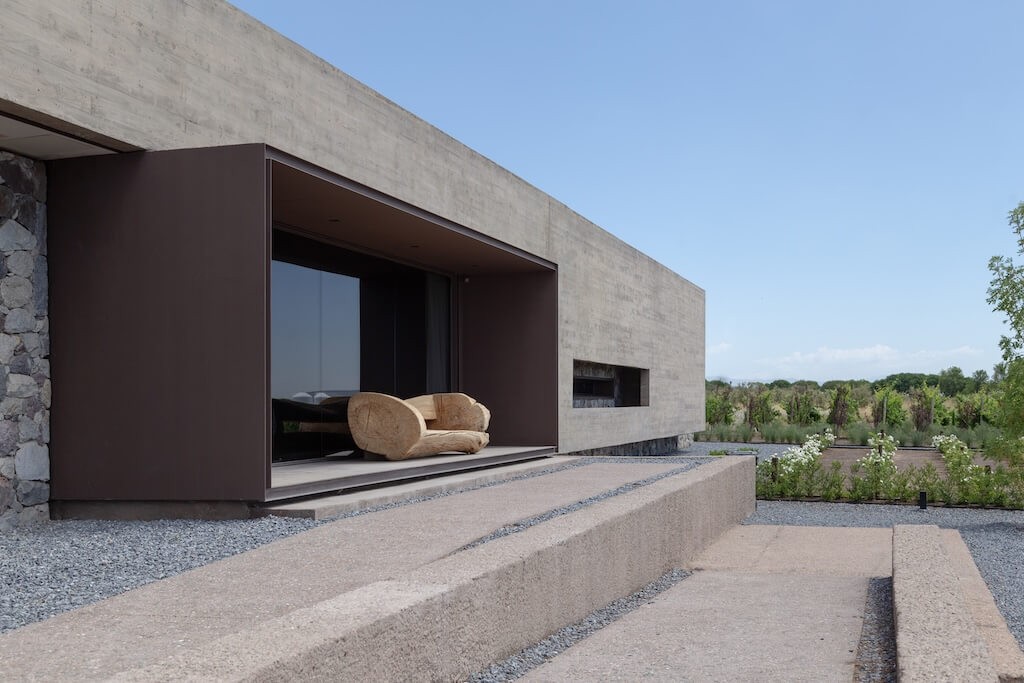
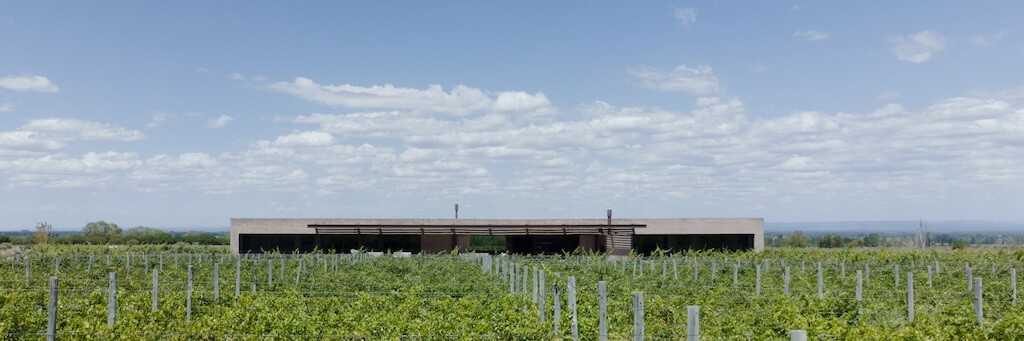
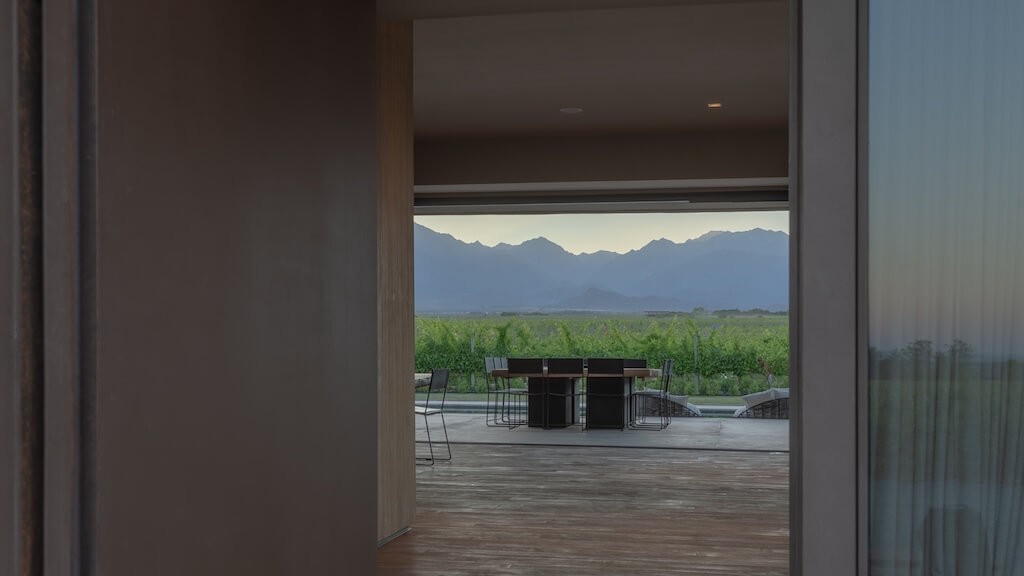
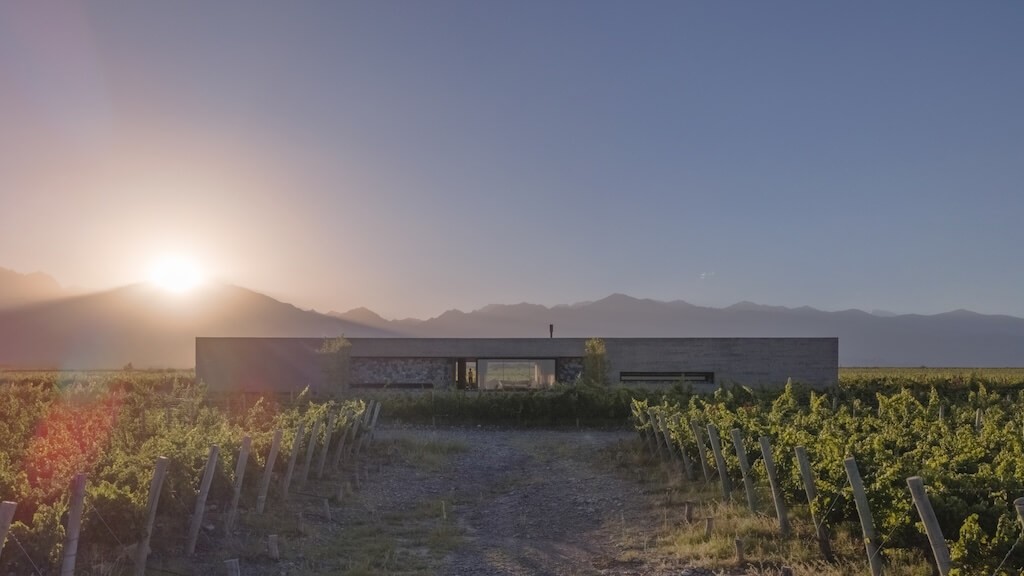
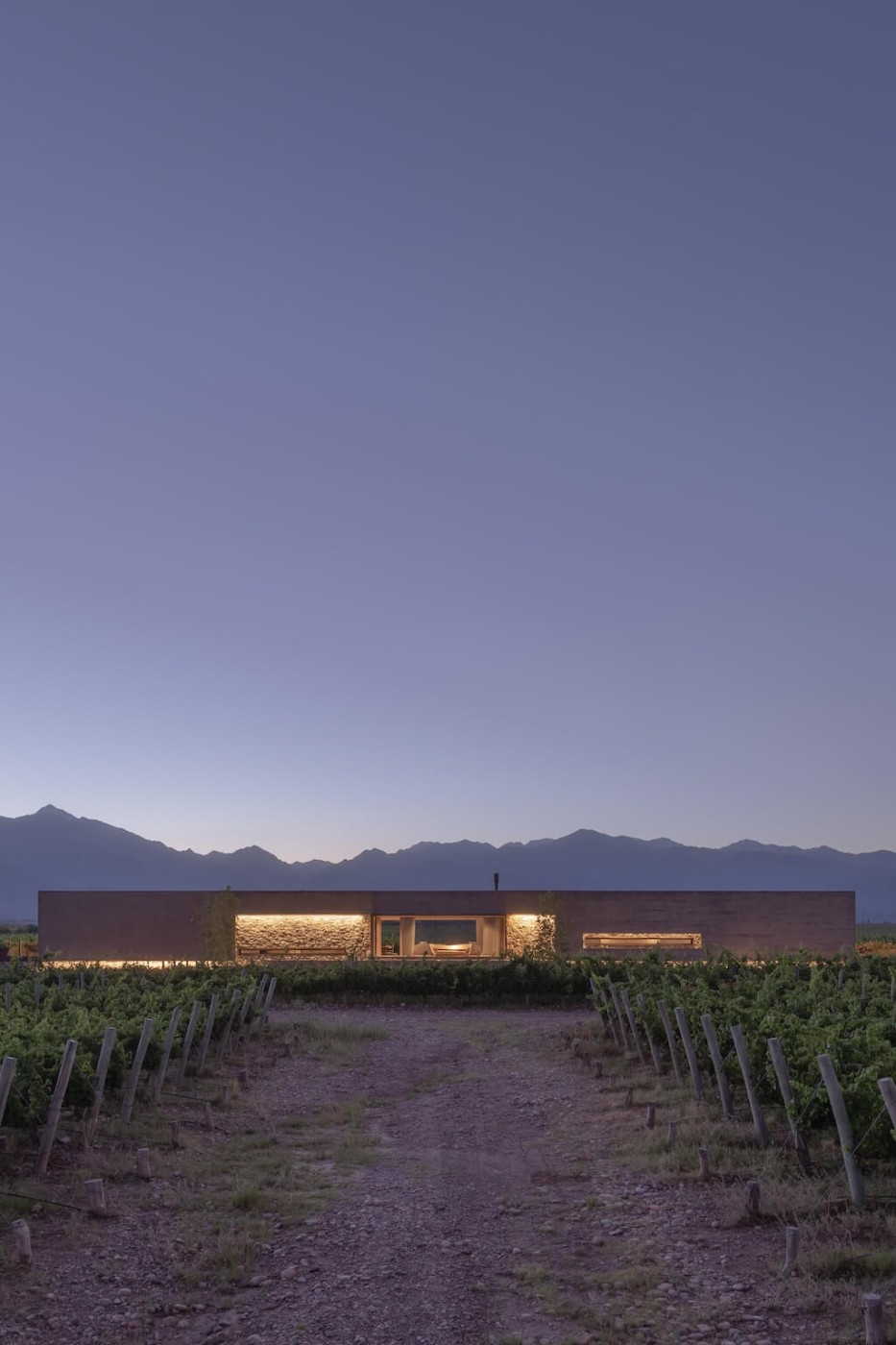
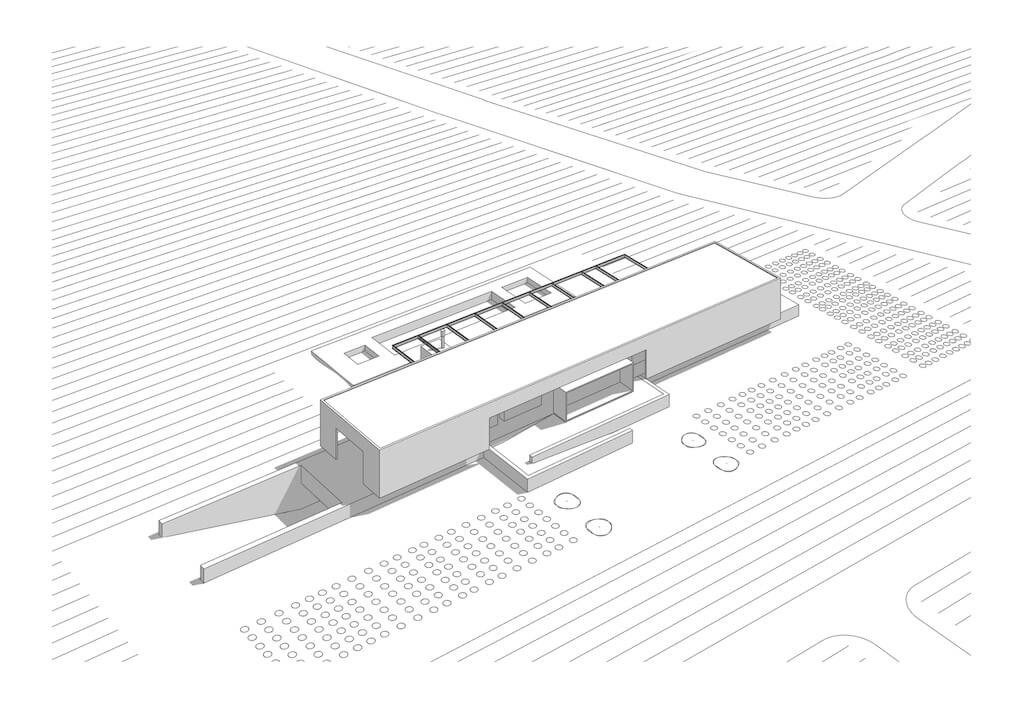
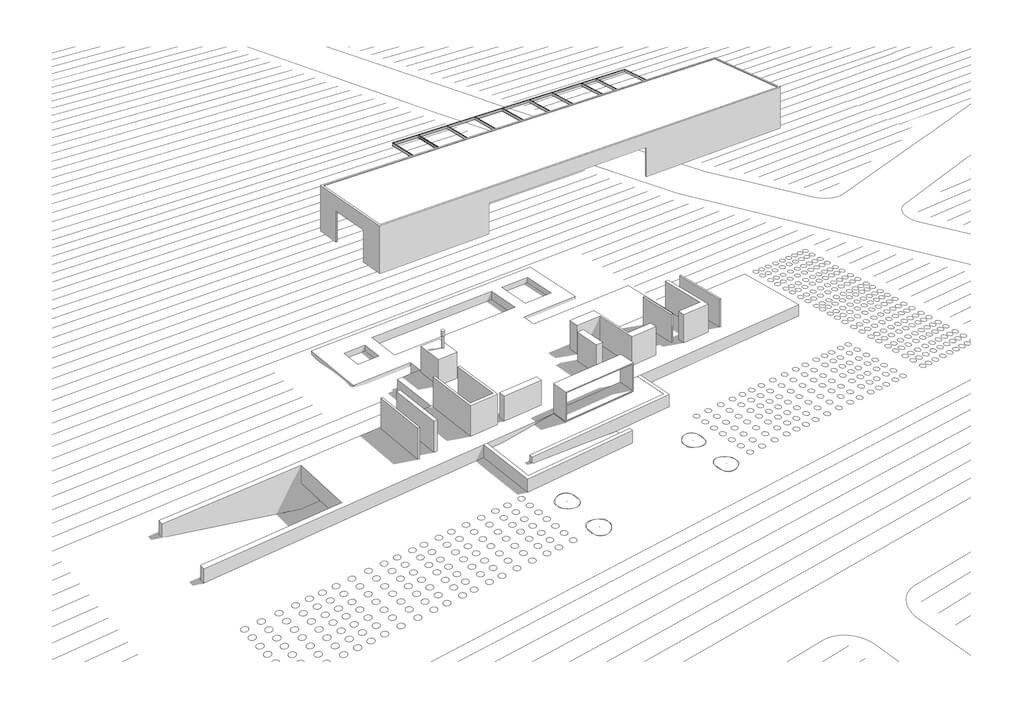
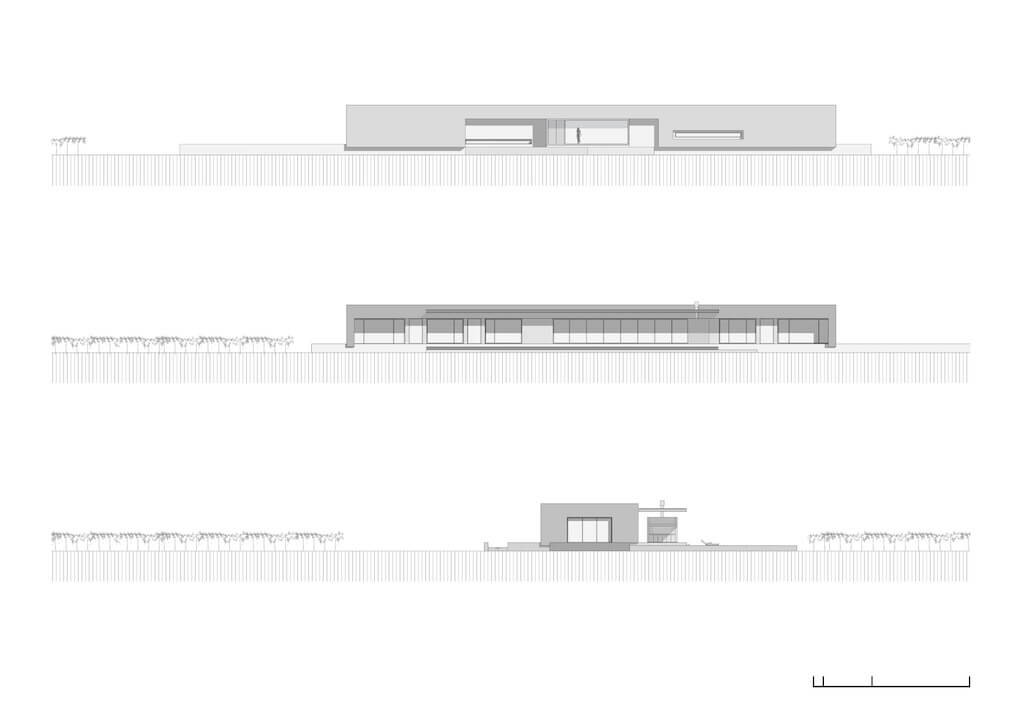
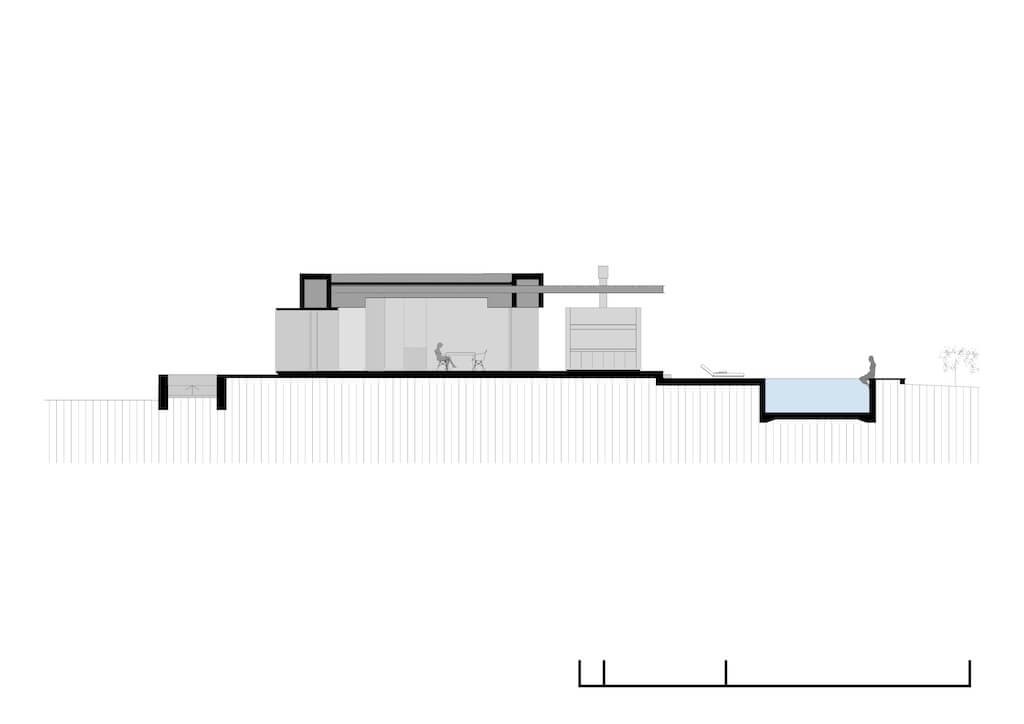
The project’s guiding idea emerged from understanding the territory as a horizontal and silent geometry, where architecture aligns with the natural order of the place—the cosmos. Conceived as an inhabited line laid parallel to the Andes, the house organizes its functions and directs every space toward the mountain horizon. Its transverse arrangement expresses a desire for belonging: each space participates in the same act of contemplation.
The design strategy arises from three core principles:
Horizontal integration, understood both as a compositional gesture and as an attitude toward the landscape. Through a linear circulation on the eastern side, the program unfolds and opens westward toward the mountains.
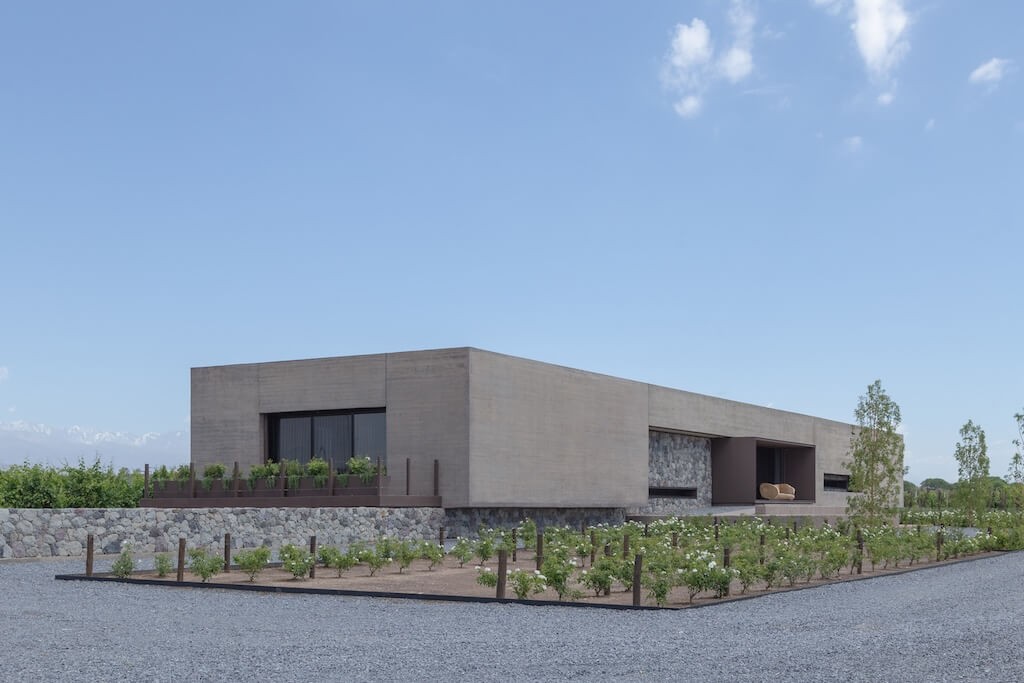
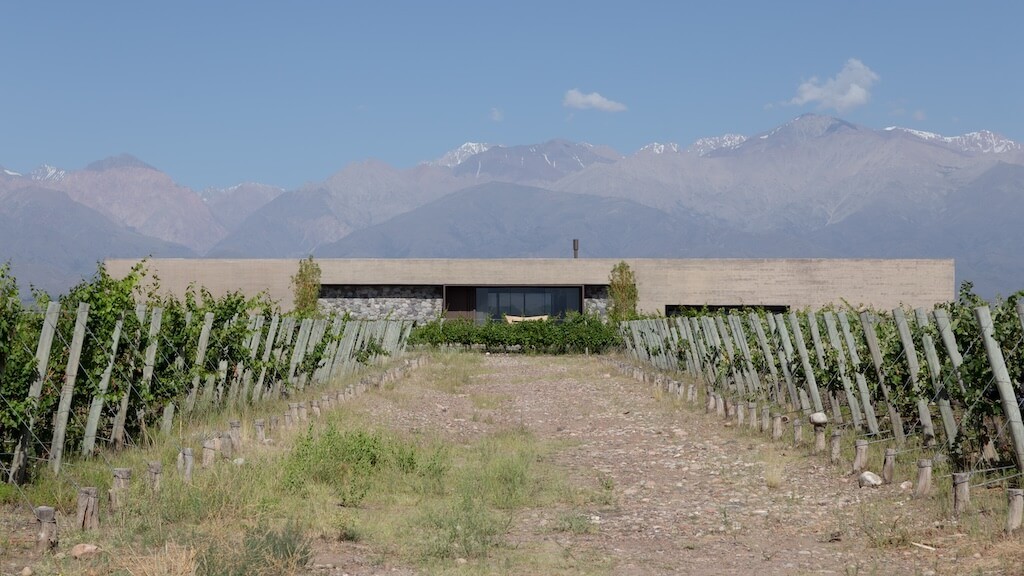
The platform as threshold and mediation, a plane that elevates the gaze above the vineyard rows, connecting it to the mountains while establishing the right degree of detachment from the ground.
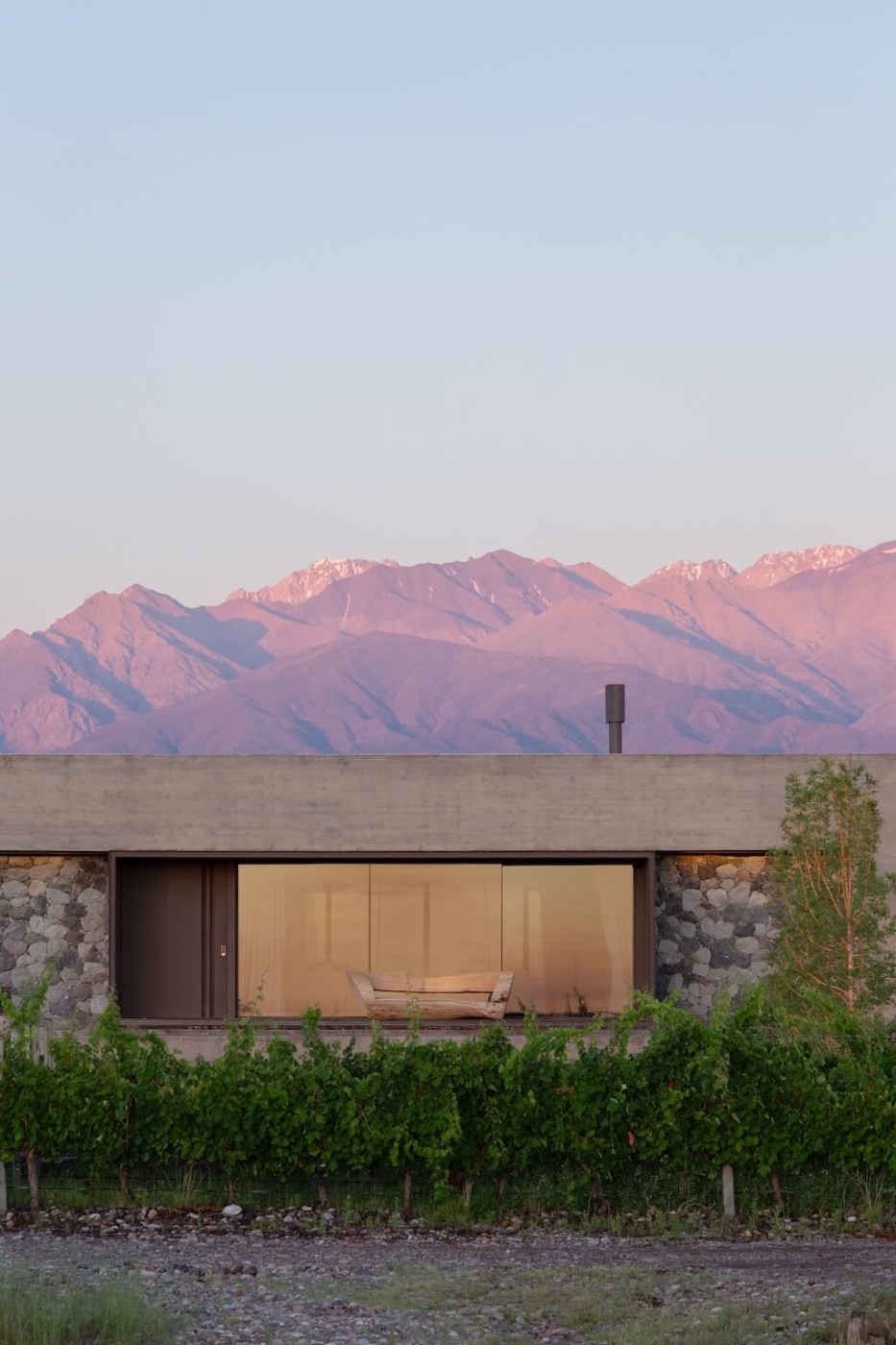
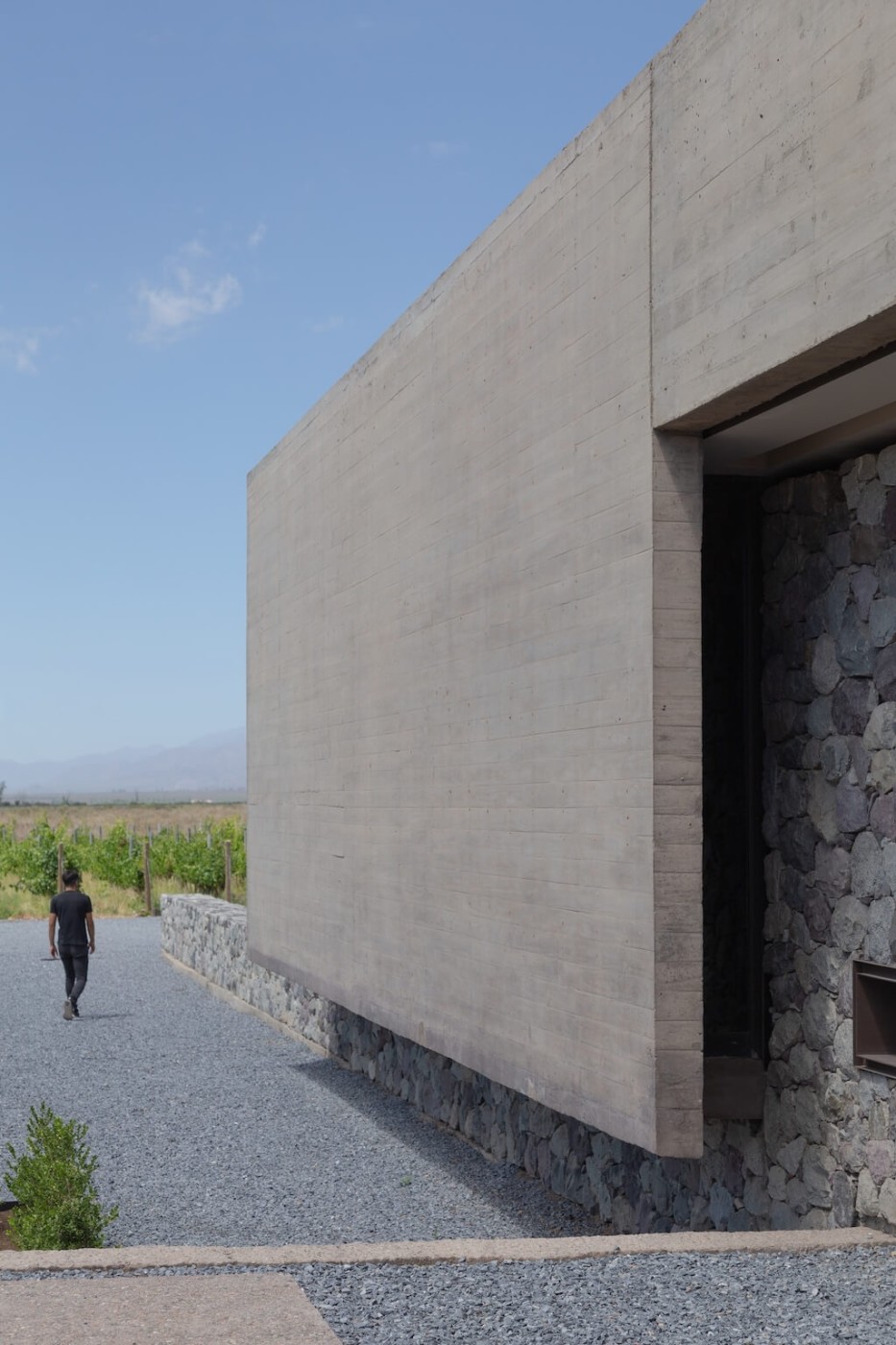
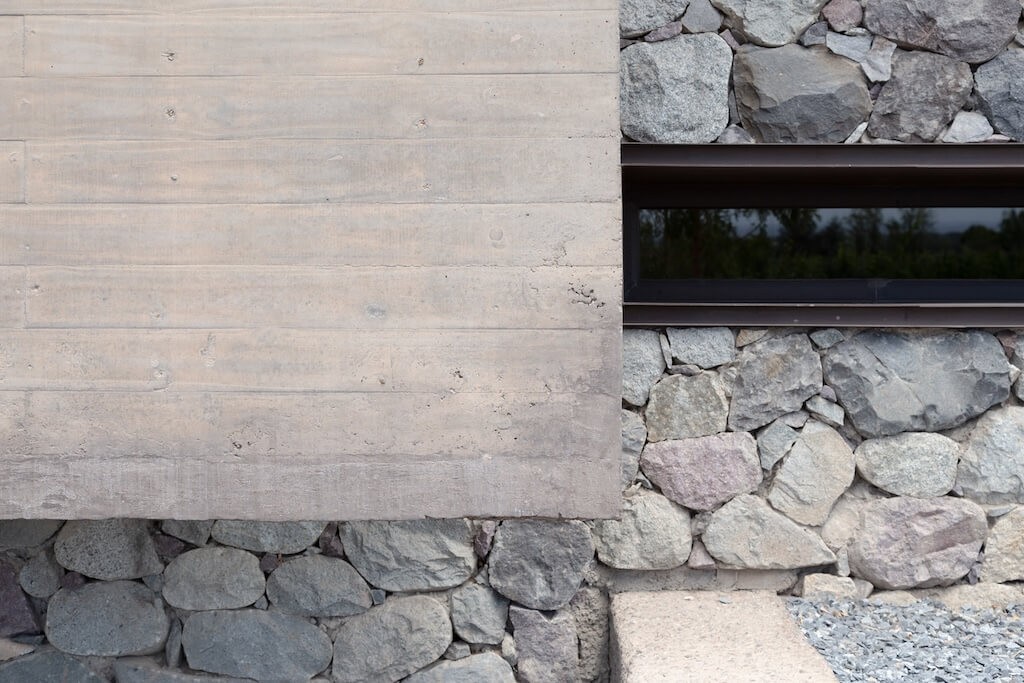
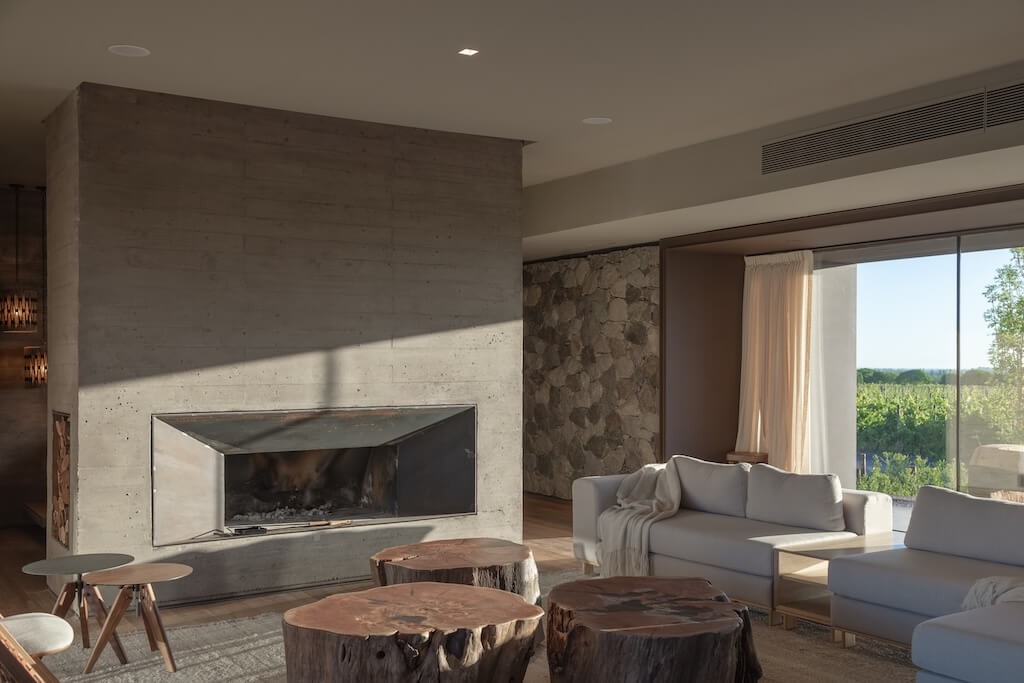
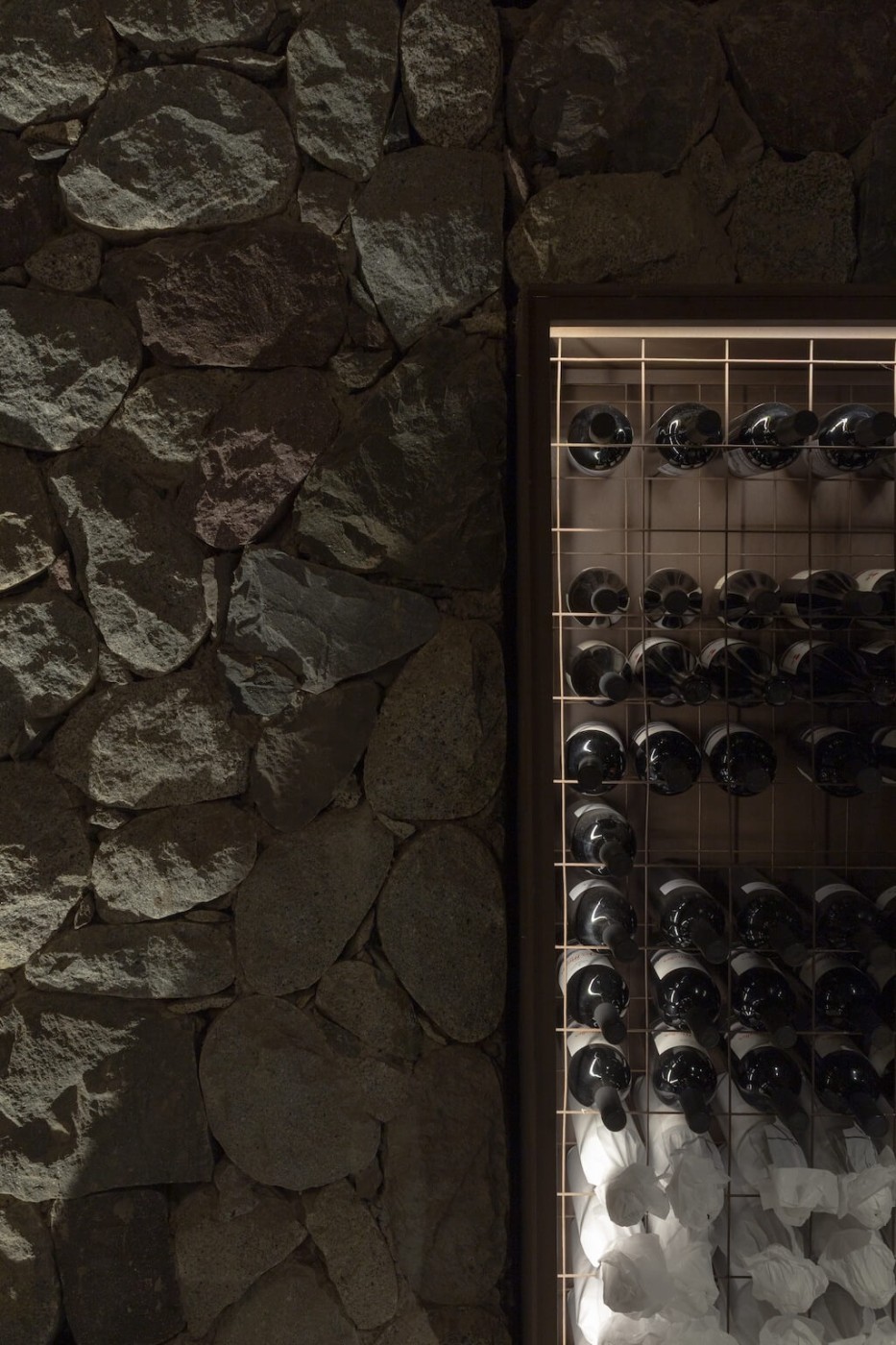
Material continuity with the environment, where local stone and pigmented concrete express a shared mineral nature. Mass, texture, and tone merge into a material continuity with the Andes. The concrete, serene and mineral, lends weight and timelessness; the stone, with its irregular density, anchors the building to the site.
Together, these principles shape an architecture that seeks to endure without imposing itself, to integrate without dissolving. A quiet, tectonic presence that rises from the land as an extension of its own structure. The overall composition responds to a criterion of synthesis: a geometric language, proportions guided by the ancient notion of number as a principle of beauty, and a calibrated balance between opacity and transparency.
To inhabit this house is to enter a different rhythm—one that invites stillness, where time becomes material and silence gains depth. Every space heightens awareness of the present moment. Its austere geometry, stripped of artifice, becomes meaningful in its service to the essential. It offers itself as a bridge between human life and nature, where dwelling becomes an act of contemplation. More than a house, it is a pause in the landscape: a silent presence whose purpose is defined by the immensity that surrounds it.
Project name: Strazik House
Architecture firm: González Olsina & Vega Arquitecto
Location: Los Chacayes, Tunuyán, Mendoza, Argentina
Photography: Luis Abba
Principal architect: Charly González Olsina, Eduardo Vega
Design team: Charly González Olsina, Eduardo Vega
Collaborators: Cecilia Blanco, Nicolás Telechea, Bianca Brescia
Interior design: Consuelo Delgado
Built area: 750 m²
Site area: 5 ha
Design year: 2022
Completion year: 2023
Landscape: Eduardo Vera
Visualization: Luis Abba
Tools used: Adobe Photoshop
Construction: GR Housing
Material: Concrete, Stone, Wood
Budget: Undisclosed
Client: Private
Status: Built
Typology: Residential › House
By Alfredo González