



La Vigilia Winery is located within The Vines of Mendoza development, in the area known as the “Villa de Enólogos.”
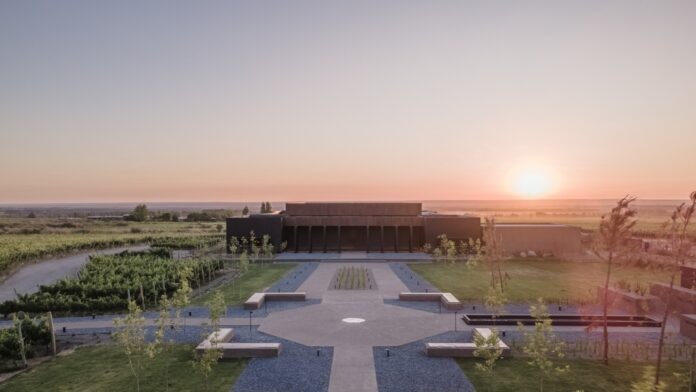
Within this area, a base program was established consisting of a 130,000-liter winery and a restaurant with approximately 40 seats.
Everything interacts with each other, and everything interacts with the landscape.
The project’s main challenge was the site itself, as it is located at the entrance of The Vines on a relatively small plot (just under 2 hectares) with an organic shape. Another challenge posed by the site and its location was giving equal priority to the four views.
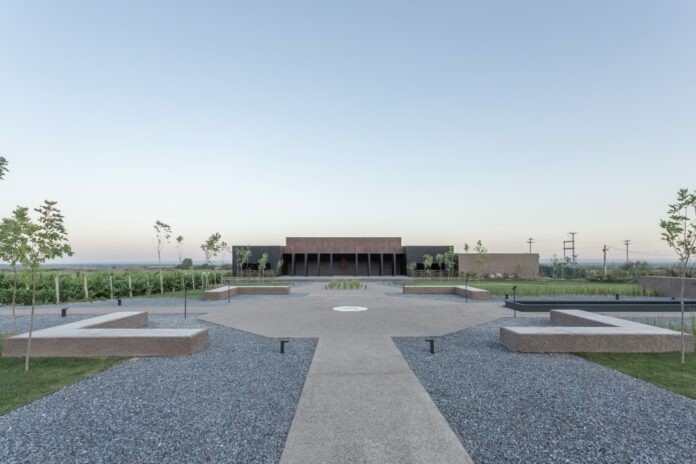
The buildings are connected by an axis that organizes the layout and features, at a key point for the perspectives, an entrance plaza.
Based on these premises, the core concept consists of two building volumes with distinct architectural languages, characterized by the disruptive placement of the restaurant volume—dictated by the site and the views.
The buildings are linked by an articulated axis, which includes an entrance plaza at a key point for the views.
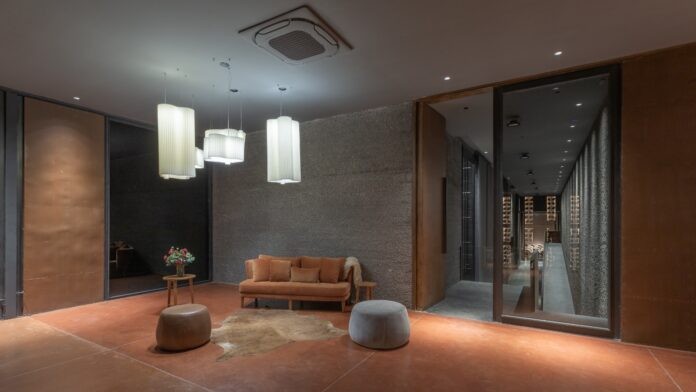
This entrance plaza welcomes us with a space that combines a significant and tangible geometry: a square and an octagon at a scale that contains, within the vast landscape.
Within this space, the materiality that will be found in the buildings is hinted at, acting, in a way, as a kind of center of gravity. It is also a point of balance, stability, and perception of unity for the entire complex, from which the visual axes extend. The perspectives are perfectly aligned.
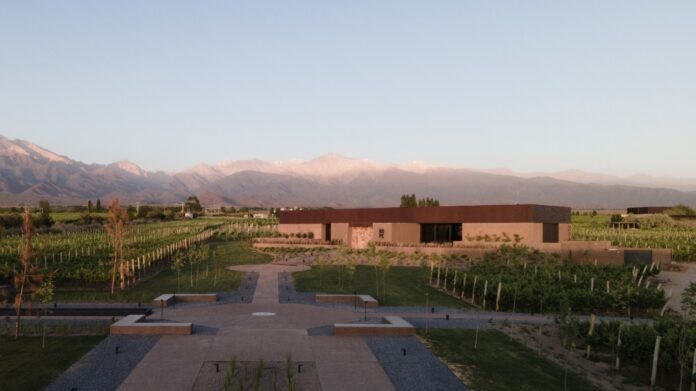
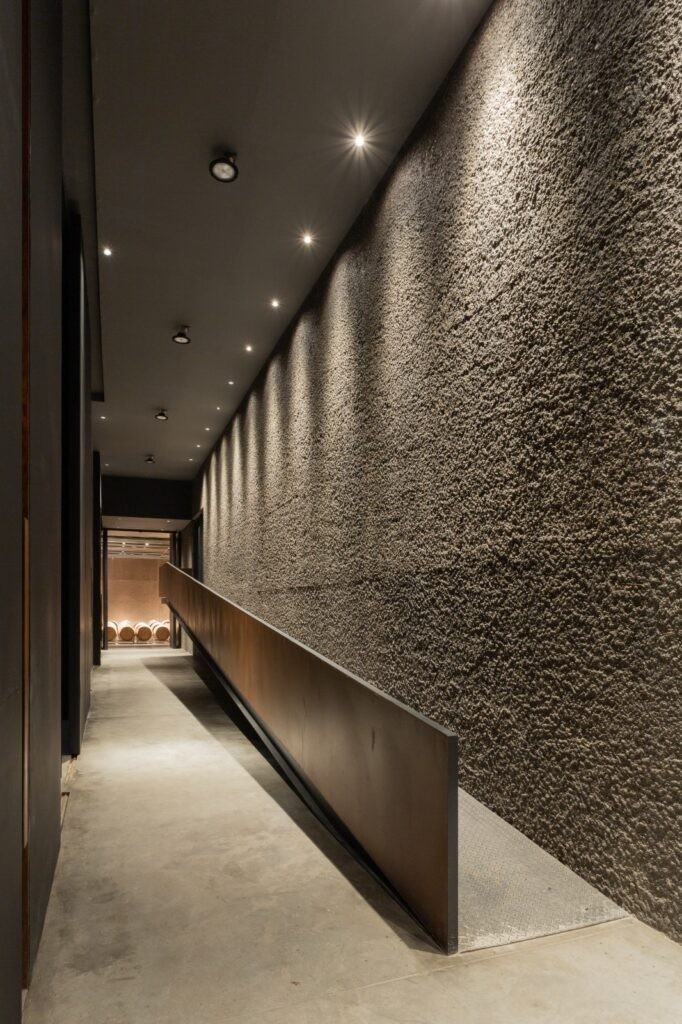
The larger volume is that of the winery, which, following Mendoza tradition, was conceived as both an industrial building and one with a sacred character.
The design draws inspiration from the meaningful relationship between human scale and the temple, the moderation of space, the careful balance between simple volumes, the austerity of a deep and essential materiality, and light as the guiding element. This approach allows us to achieve a result of sober and elegant expression.
The entrance plaza welcomes us from a space that combines a significant and tangible geometry.
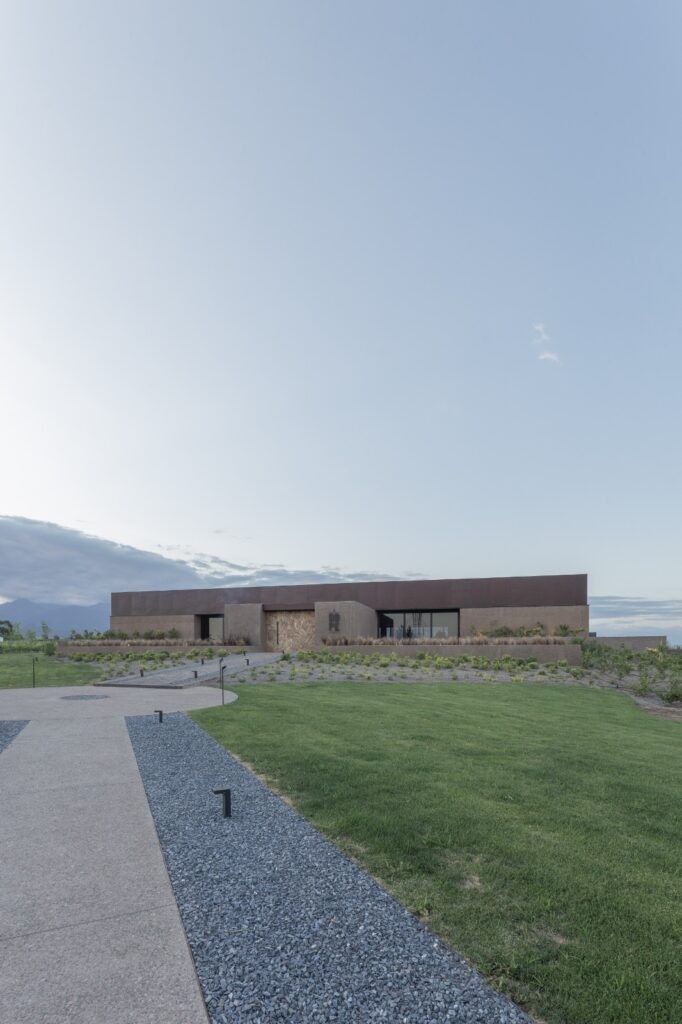
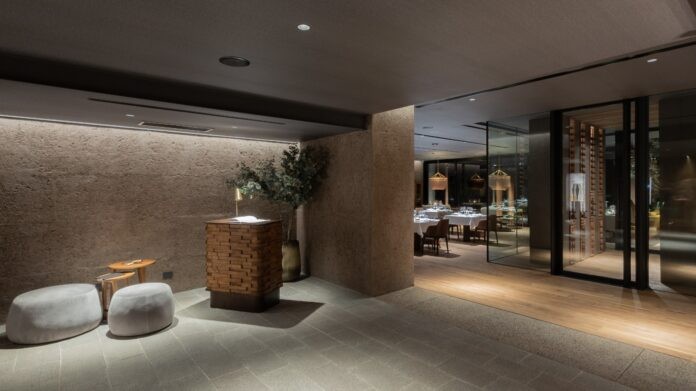
The restaurant, clearly smaller in scale than the winery, gains prominence within the complex due to its elevated position and its strongly angled placement relative to the established order.
Its forms are simple and horizontal, intended to act as a pedestal for the magnificence of the mountain. The restaurant is a space for the expansion of the senses, designed to offer a full sensory experience. For this reason, the focus of the space is on simple materials and abundant views.
This is the La Vigilia project—a single, harmonious composition. Everything interacts with each other, and everything interacts with the landscape.
Technical Sheet
Architecture Design: Integra
Structural Design: Gamez & Moruno
Industrial Design: Mario Japaz
Thermomechanical Installations: Ceisa
Electrical Installations: Rev Select
Sanitary Installations: Alpes Sanit
Low-Voltage Installations: Juan Pablo García
Metalwork: Arquimetal
Civil Works: Santiago Monteverdi
Project Management: Integra
Interior Design: Soledad Zamora
Key Suppliers
Lighting Materials and Design: Aspen Lumière
Wood Flooring (solid, engineered, and prefinished): Grupo Forestal
Aluminum and Glass Carpentry: Mendoglass
Earthworks: Ricardo Filgus